2026-09-25 · Insights · By Tu Chung-Hsuan · 中文版
ESG Gift Box QR Traceability: See Where the Herbs Came From
The QR code on the gift box links to the record for that specific batch of herbs: the week it was harvested, the social-welfare partner farm it came from, and how each item was verified. Recipients scan it and see the land and the people behind the gift. The company that sent it can put the same record into the appendix of its sustainability report.
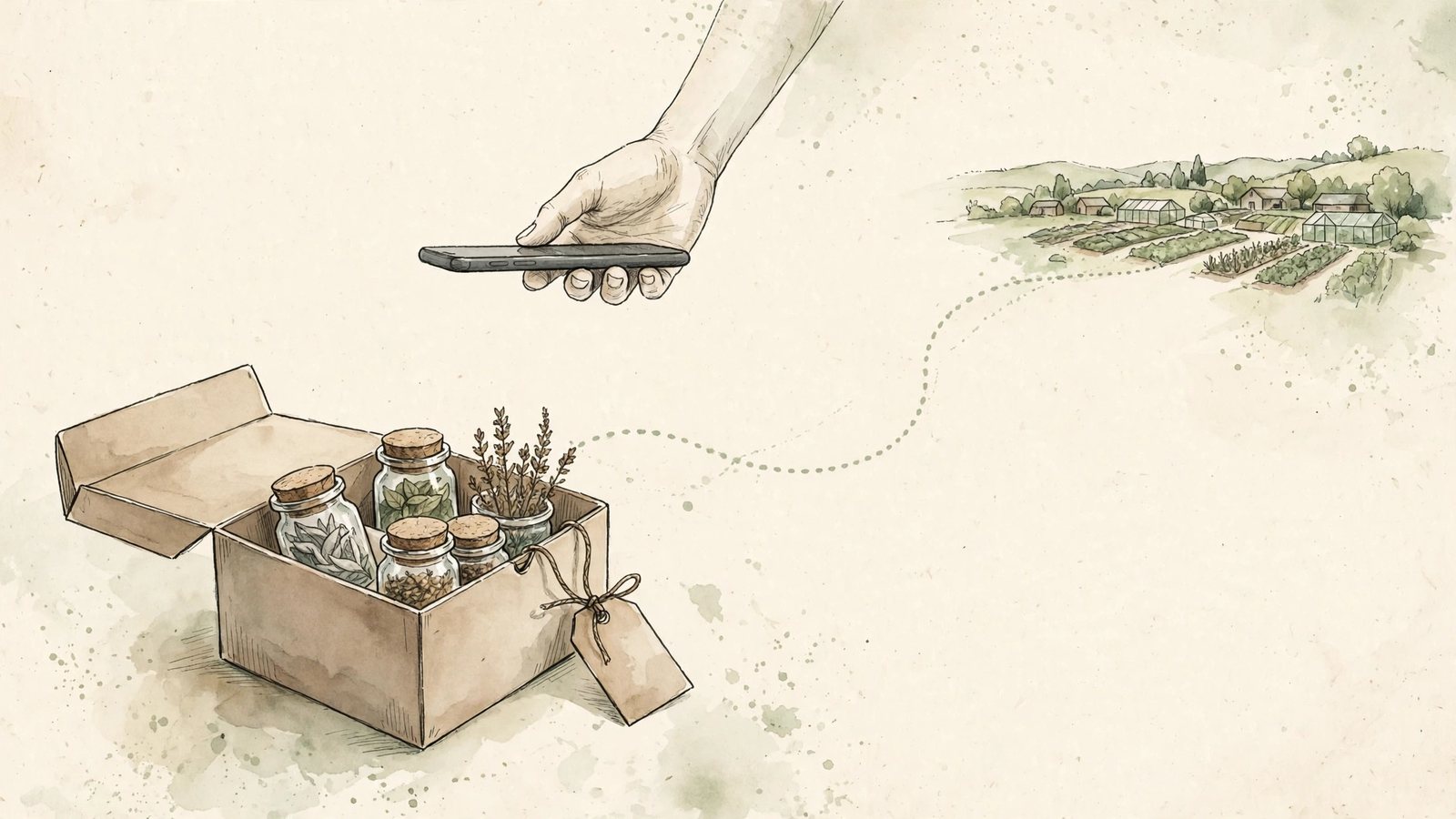
What is left after the gifts go out?
In Taiwan, companies budget for gifts around the three major holidays (Lunar New Year, the Dragon Boat Festival and the Mid-Autumn Festival) anyway. Once the purchase is done, what usually remains is an invoice and a line saying "we supported a disadvantaged group."
An invoice shows where the money went, but not what the purchase was connected to. When you want to be specific in your sustainability report, that is the piece most often missing: who grew this, where, and when.
What the traceability page shows
Every gift box comes with a QR code. Scanning it opens the public record for that batch. Depending on each farm's disclosure settings, it includes:
- Harvest week and farm: which week this batch was harvested and which farm it came from.
- Farming records: how the land was worked that week, and the status of the pesticide-free confirmation.
- Harvest and packing photos: images taken in the field at harvest and during packing.
- How each item is verified: every entry is labeled as confirmed by the partner organization, calculated by the system, or self-reported by the farm.
None of these records were created just for the gift box. Partner farms already report every week on their farm work, work hours, harvest and environmental conditions, and each report is checked by the system, with anything questionable sent to an administrator for manual review before it is counted. So far, 165 weekly reports have been reviewed (as of 2026-09-25). The traceability page simply opens up the part that belongs to this batch for the recipient to see.
How much does 100 kg of lemongrass become?
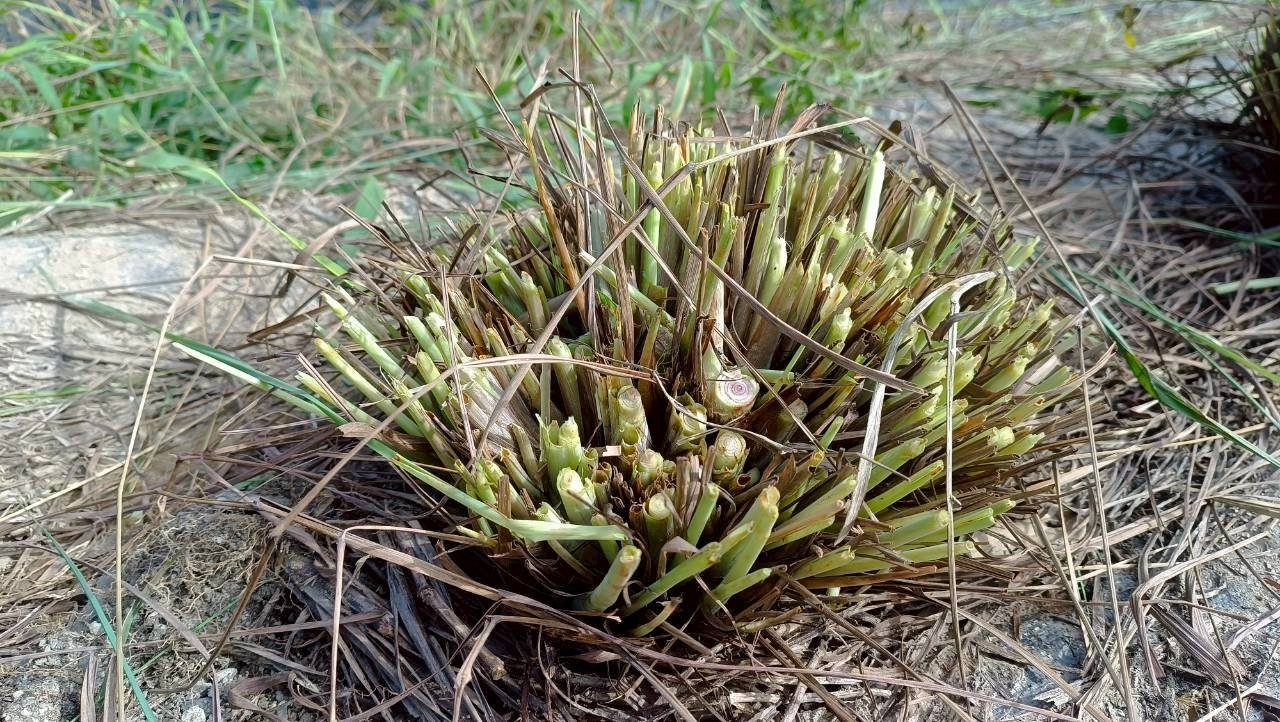
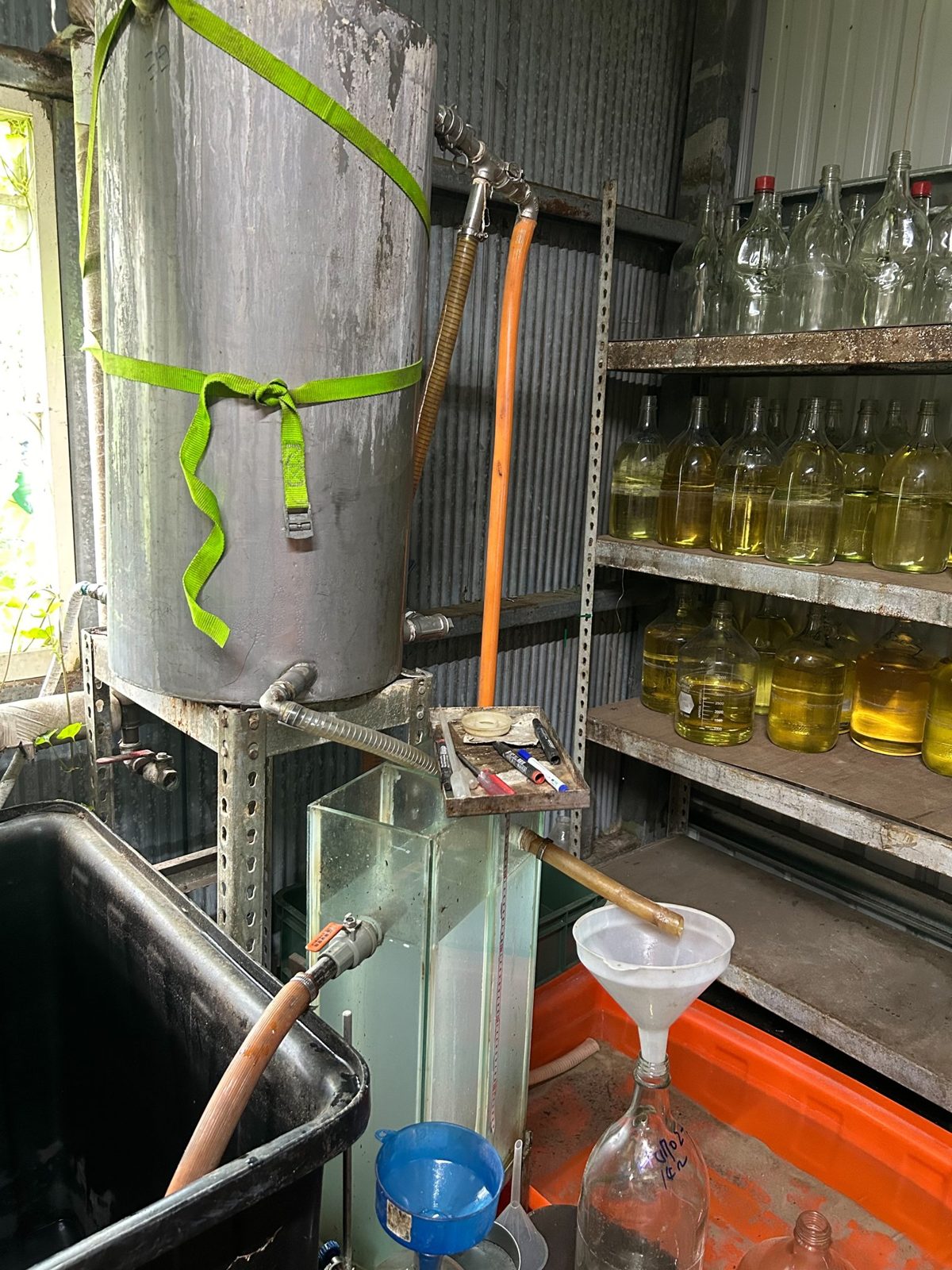
About 100 kg of lemongrass yields roughly 500 cc of essential oil and close to 100 liters of hydrosol. Those 500 cc of essential oil are enough for around 500 bottles of finished product.
When we first worked those numbers out, it became clear why one farm is not enough. To gather the volume needed for a single processing run, we often have to combine harvests from several social-welfare farms.
So one bottle in a gift box usually stands for several farms and several weeks of harvest, not one farm or one person. The traceability page exists to give those invisible parts a place where they can be seen.
One record, three uses
- For the recipient: scanning the code shows a specific week and a specific farm, so the gift comes with a story.
- For your company's report: batch records can be compiled into an appendix and presented alongside the purchase details, showing which part of the supply chain this purchase supports.
- For a Buying Power filing: Buying Power is the Ministry of Economic Affairs' social innovation procurement awards program. Purchases from organizations registered in the ministry's Social Innovation Organization database can be filed, and purchase details and receipts are required documents. The filing process is covered in How to File for Buying Power.
What we keep private to protect our partners
Some things are deliberately left off the traceability page:
- The farm's exact location: only the city/county and township are shown. What a buyer needs to confirm is which farm the batch came from; the exact location is the partner organization's private information.
- Names and images of the people served: work hours are recorded, but participants' identities are not made public. Partner organizations are responsible for the people they serve, and we hold that line together with them.
- Organizations that have not agreed to be named: one partner in the supply chain currently prefers not to be named publicly. The partnership and the data are the same, and it is included in the farm count, but it appears under a placeholder name on the traceability page. Each organization decides for itself whether to be named.
Every record shows where it came from
What matters on the traceability page is not the layout but the label next to each record showing how it was verified. Anything self-reported by the farm is labeled exactly that, so readers know how much weight each number carries. Our criteria are explained in the Data Methodology, and live public data is on the Sustainability Data Dashboard.
Take pesticide-free farming as an example. The current confirmation rate is 100% (self-reported by farms and checked week by week; as of 2026-09-25), which shows that every week has a record. Pesticide residue testing is carried out separately by an external laboratory. Read together, the two records give a fuller picture than either number alone.
Frequently asked questions
Can gift box traceability records go into our sustainability report?
Yes, as an appendix or supporting evidence. We suggest presenting them together with the purchase details to show which supply chain the purchase supports. Platform-wide figures such as total work hours belong to the whole supply chain and are not the same as your company's own impact.
Do recipients need to download an app to scan the QR code?
No. It is a regular web page that opens with a phone camera.
Why doesn't the traceability page show the farm's exact location?
Locations are shown only down to the city/county and township. The exact location is the partner organization's private information, and it adds nothing to confirming which farm a batch came from.
Why is one farm shown without a name?
That partner currently prefers not to be named publicly. The partnership and the data are the same, and it is included in the farm count; each organization decides for itself whether to be named.
Scope and limitations
Before including any of this in your report, please keep the following in mind:
- Traceability records cover only the supply chain of Selvans Social Farm's partner farms, not your company's other suppliers.
- Selvans provides reference material on implementation. It is not a compliance certification, and whether and how to disclose it is your company's decision.
- The data are self-declared by Selvans and its partner farms, with supporting documents and an audit trail. They have not been reviewed by an external assurance provider. Species identification uses iNaturalist, and pesticide residues are tested by an external laboratory.
- Platform totals are not the same as any single company's impact. The role of a gift box purchase is to support this supply chain, and attribution is explained with the data.
- Please do not use the data in this article for carbon sink or carbon neutrality claims. Those require a methodology, a baseline and proof of additionality, and we have none of the three.
Further reading
2026-10-04
What Is Social Farming? How It Differs from Sheltered Farms
Social farming puts agricultural production first and gives people who need support real work. How it differs from sheltered farms and horticultural therapy.
2026-09-25
Xishou Herb Partnership: Three Years With a Social-Welfare Farm
The Xishou Herb Partnership pairs one company with one social-welfare farm for three years. How it works, what you receive and what can go in your report.
2026-09-25
How to File for Buying Power in 2026: Dates, Scoring, Documents
A guide to filing for Taiwan's Buying Power social innovation procurement awards in 2026: the purchase period, deadline, scoring tiers and documents.
About Selvans Social Farm
Selvans Social Farm (思凡自然農園) is a social farm in Daxi, Taoyuan, Taiwan. We have farmed in Daxi since 2019 and registered as a business in 2022. We grow herbs without pesticides together with 8 farms run by social-welfare organizations in 7 counties and cities, so that people with disabilities and people in mental-health recovery have paid work on the farm.
Want to see how your company could start?