2026-09-25 · Insights · By Tu Chung-Hsuan · 中文版
How to File for Buying Power in 2026: Dates, Scoring, Documents
Buying Power is the Ministry of Economic Affairs' (MOEA) award program for social innovation procurement: if you buy from organizations registered in its Social Innovation Organization database, you can file at the end of the year. It is an award, not a tax deduction, and not a scoring item in ESG evaluations. For the 2026 cycle (ROC year 115), purchases count if made between November 1, 2025 and October 31, 2026. The filing system opened in the first week of September, and the deadline is 5:00 p.m. on November 11, 2026.

First, what it is
The official name is "Buying Power: Social Innovation Products and Services Procurement Award Mechanism." It is run by the MOEA's Small and Medium Enterprise and Startup Administration.
It is an award. Winners receive public recognition, which can be cited in a sustainability report as external acknowledgment.
There are a few things it is not. Keeping them in mind before you file helps avoid misstatements:
- It is not a tax deduction: the purchases are treated as ordinary business expenses, which has nothing to do with the award.
- It does not add points to ESG evaluations: evaluations have their own indicators and requirements, and the two should be kept separate.
- It is not a supplier qualification: it does not make a supplier a "qualified vendor."
Who can file, and which purchases count
Who can file: central and local government agencies, state-owned enterprises, private companies and civic organizations. Ordinary companies are included.
Who you buy from: the seller must be registered in the "Social Innovation Organization Registry" on the social innovation platform of the MOEA's Small and Medium Enterprise and Startup Administration.
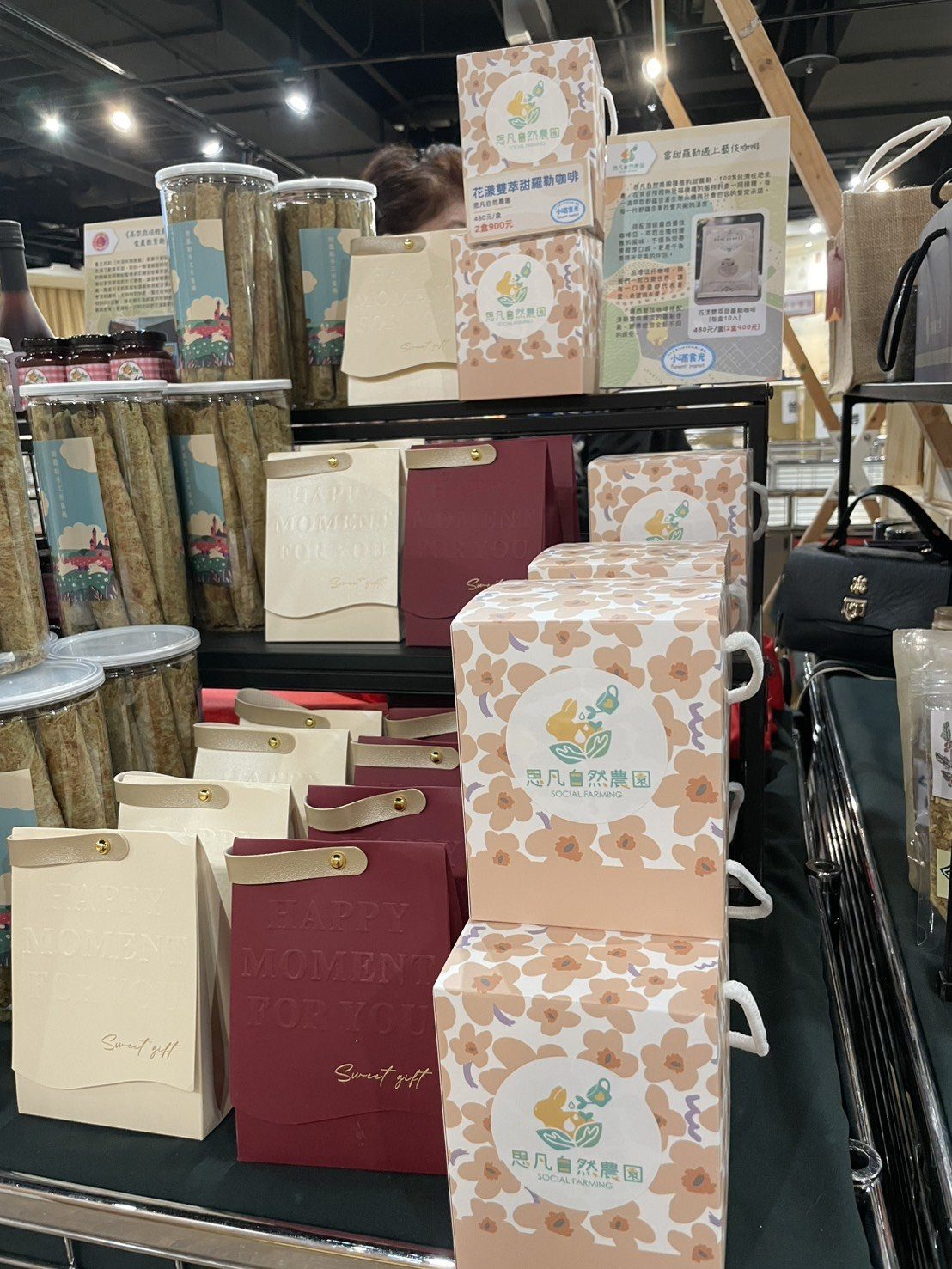
The registry is public, so you can look up any organization by name before you buy. Selvans' entry is here: Selvans Social Farm's registration page in the Social Innovation Organization Registry (in Chinese).
Key dates for the 2026 cycle
- Purchase period: November 1, 2025 to October 31, 2026
- Filing system opens: first week of September 2026
- Filing deadline: 5:00 p.m., Wednesday, November 11, 2026
The purchase period spans two calendar years; it does not run January to December. The most common mistake each year is assuming a calendar year and then assigning November and December purchases to the wrong cycle. Putting these dates in your calendar when you plan the budget saves a lot of cleanup later.
How scoring works
The procurement award score has three parts:
- Total purchase amount (70% weight): NT$500,000 cumulative earns 30 points, NT$1 million earns 40, NT$5 million earns 50, NT$10 million earns 60, and NT$30 million or more earns 70.
- Number of social innovation organizations purchased from (30% weight): each organization counts only if you bought at least NT$50,000 from it. 1 to 4 organizations earn 10 points, 5 to 9 earn 20, and 10 or more earn 30.
- SME bonus: companies that meet Taiwan's SME criteria (paid-in capital of NT$100 million or less, or fewer than 200 regular employees) get an extra 10 points.
The organization count is tiered: going from 1 to 3 organizations does not change the score; you only move up a tier at 5. So there is no need to split one order just for points. That makes every relationship too shallow to leave anything behind. A more natural approach is to match budgets that are already different in nature to suitable social innovation organizations, for example holiday gifts, employee events and community partnerships. Each one that reaches NT$50,000 counts toward the total.
There are also special awards in three categories:
- Sustainable Deepening: project partnerships with a social innovation organization lasting more than two years.
- Innovative Co-Prosperity: partnerships of less than two years.
- Public Sector Innovation: government agencies and state-owned enterprises.
For a long-term partnership, such as the three-year Xishou Herb Partnership (a three-year program pairing one company with one of our partner farms), you could consider entering the Sustainable Deepening category in the third year, with the changes over the years compiled into concrete figures.
Documents to prepare
According to the 2026 guidelines, a filing requires:
- Purchase details (Appendix 6 of the guidelines)
- Proof of purchase: a sales statement issued by the social innovation organization and stamped with its business registration number seal, or purchase invoices or receipts
- Letter of authorization for an agent (Appendix 2 of the guidelines)
- For joint filings with subsidiaries or branches, a list of the participating units
- For special awards, a review presentation, partnership photos and documents proving the partnership
Where filings most often get stuck
- Vague item descriptions on invoices: entries like "miscellaneous expenses" or "gifts" make it hard to tell which product or service from which organization they refer to. Clear descriptions also help you recognize the purchase a year later.
- No record of registration at the time of purchase: if the seller was registered when you bought but you only check when filing, and they happen to have left the registry, that purchase becomes hard to count. Saving a copy of their registry page at the time of purchase is the safer route.
- Different kinds of purchases on one invoice: gift boxes, event services, and Xishou Herb Partnership products and services are different things. Invoicing them separately keeps the details much clearer.
Documents we prepare when you buy from Selvans
Your company files the application, and we help you get the required materials together:
- Proof of purchase amounts and itemized purchase details, invoiced separately by type (gift boxes, sustainability event services, and Xishou Herb Partnership products and services)
- A saved copy of our Social Innovation Organization Registry page
- Help confirming that purchase dates fall within that year's purchase period
If you also want to explain in your report what the purchase supports, here is the current shape of the supply chain: Selvans works with 8 social-welfare partner farms (farms run by social-welfare organizations) in 7 cities and counties. So far this year, they have logged 8,161.5 hours of employment for disadvantaged workers (calculated from weekly attendance records; as of 2026-09-25), drawn from 165 reviewed weekly reports. These figures cover the whole supply chain, not any single company's impact. How each figure is verified is explained in the Data Methodology, and the live version is on the Sustainability Data Dashboard.
Sample wording for your report
In [year], the Company purchased NT$[amount] from [number] social innovation organizations registered in the MOEA Social Innovation Organization Registry, and filed under the "Buying Power: Social Innovation Products and Services Procurement Award Mechanism." Purchases from Selvans Social Farm support employment for disadvantaged workers at the social-welfare farms in its supply chain. The related work hours are calculated from attendance records reported weekly by the partner farms and can be traced back to the week and farm.
Note the verb "support." The purchase supports this supply chain; it does not directly generate those work hours. Assurance providers often pay attention to this wording when reviewing a report.
Frequently asked questions
Is Buying Power tax-deductible?
It is a procurement award run by the Ministry of Economic Affairs, and it has nothing to do with tax deductions. Purchases are handled under the normal rules for business expenses; please follow your company's accountant on the details.
Does winning Buying Power add points to ESG evaluations?
Not directly. An award can be one piece of supporting material for "specific plans and implementation results," but evaluations look at whether each requirement itself has been met.
How can we check whether a supplier is in the Social Innovation Organization Registry?
Search the organization's name on the social innovation platform of the MOEA's Small and Medium Enterprise and Startup Administration; the registry is public. We recommend saving a copy of the registry page at the time of purchase.
What is the purchase period for the 2026 Buying Power cycle?
November 1, 2025 to October 31, 2026, spanning two calendar years. The filing deadline is 5:00 p.m. on November 11, 2026.
Is it better to buy more from one organization or to spread purchases across several?
The organization count is tiered: 1 to 4 organizations all earn 10 points, the score only rises at 5, and each organization must reach NT$50,000 to count. We suggest allocating budgets naturally by their purpose rather than splitting orders for points.
Scope and limitations
Before including any of this in your report, please keep the following in mind:
- The supporting evidence in this article covers only the supply chain of Selvans' partner farms, not your company's other suppliers.
- Selvans provides proof of purchase, itemized purchase details and reference material on implementation. This is not a compliance certification. Your company files the application, and awards are decided by the organizer's review.
- The data are self-declared by Selvans and its partner farms, with supporting documents and an audit trail. They have not been reviewed by an external assurance provider. Species identification uses iNaturalist, and pesticide residues are tested by an external laboratory.
- Platform totals are not the same as any single company's impact. What your company can cite is the portion attributed to your partnership.
- Please do not use the data in this article for carbon sink or carbon neutrality claims. Those require a methodology, a baseline and proof of additionality, and we have none of the three.
- Eligibility, periods, scoring and required documents are governed by the guidelines the organizer publishes each year. This article is based on the 2026 (ROC year 115) guidelines.
Further reading
2026-10-04
What Is Social Farming? How It Differs from Sheltered Farms
Social farming puts agricultural production first and gives people who need support real work. How it differs from sheltered farms and horticultural therapy.
2026-09-25
Xishou Herb Partnership: Three Years With a Social-Welfare Farm
The Xishou Herb Partnership pairs one company with one social-welfare farm for three years. How it works, what you receive and what can go in your report.
2026-09-25
ESG Gift Box QR Traceability: See Where the Herbs Came From
A QR code on a corporate ESG gift box shows recipients which week and which social-welfare partner farm the herbs came from, and what stays private.
About Selvans Social Farm
Selvans Social Farm (思凡自然農園) is a social farm in Daxi, Taoyuan, Taiwan. We have farmed in Daxi since 2019 and registered as a business in 2022. We grow herbs without pesticides together with 8 farms run by social-welfare organizations in 7 counties and cities, so that people with disabilities and people in mental-health recovery have paid work on the farm.
Want to see how your company could start?